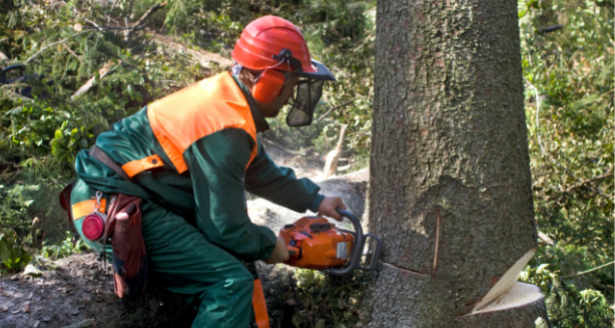
Many homeowners appreciate mature trees for the character, shade, and natural beauty they bring to a property. However, when branches grow excessively long or extend beyond the tree’s natural structure, they can create issues that are difficult—or sometimes impossible—to resolve with pruning alone. In some cases, overextended branches indicate deeper structural problems that eventually lead to the need for complete tree removal.
Understanding why this happens can help property owners in Uckfield make informed decisions about tree care and long-term safety.
Overextended Branches Increase Structural Weakness
Branches that grow far beyond the tree’s natural canopy are often heavier, more exposed, and more prone to failure. When the weight distribution becomes uneven, the tree struggles to support itself.
This can lead to:
- Cracks forming where the branch meets the trunk
- Higher stress on the main structure
- Increased likelihood of limb failure during strong winds
If the core structure becomes unstable, removal may be the only safe option to prevent collapse.
Pruning May No Longer Resolve the Problem
While regular pruning can control branch length and shape, severely overextended branches often develop internal weaknesses that pruning alone cannot fix. Attempting to cut back excessively long limbs may create further imbalance or expose the tree to infection.
In these situations:
- The tree may not respond well to significant reductions
- Removing too much weight at once can shock the tree
- The remaining structure may still be unstable
When the risks outweigh the benefits of remedial pruning, full removal becomes necessary.
Overextended Branches Can Disturb Nearby Structures
Long-reaching branches often grow towards light, which can mean extending over roofs, driveways, gardens, or neighbouring properties. As the limbs become heavier, they pose a risk to anything beneath them.
Potential problems include:
- Branches resting on or rubbing against roofs
- Pressure on fences, sheds, and other structures
- Increased risk of falling debris during storms
If the tree continues to threaten surrounding areas, removal may be the safest and most practical solution.
Root and Trunk Problems Usually Accompany Overextension
In many cases, branches grow excessively long because the tree is already struggling. When the roots or trunk are compromised—by disease, decay, soil erosion, or restricted growing space—the canopy often reacts by growing unevenly.
Signs that overextension is part of a wider problem include:
- Visible decay around the base
- Leaning or unusual trunk movement
- Sparse growth in other areas of the canopy
When the tree’s overall health is declining, removal prevents the risk of a sudden or unpredictable collapse.
Younger Trees Can Recover—Older Trees Often Cannot
Younger, more flexible trees may adapt to corrective pruning more successfully. However, mature trees with long, heavy limbs often lack the capacity to recover from the necessary structural work.
Older trees may:
- Suffer stress from major pruning
- Fail to produce strong new growth
- Decline rapidly after large cuts
In these cases, a full removal protects both the property and the surrounding environment.
Conclusion
Overextended branches are often an early warning sign that a tree is becoming unsafe or structurally compromised. While pruning can help in some situations, many trees with severe overextension face deeper health and stability issues that make full removal the safest solution. Early assessment and professional advice can prevent costly damage and ensure your outdoor space remains safe and well maintained.
If you are concerned about the condition of a tree on your property, Uckfield Tree Surgeons provides expert inspections, professional assessments, and safe tree removal services throughout Uckfield, East Sussex. Contact us today to arrange a consultation and protect your property from unnecessary risk.
Call us on: 01825 705 493
Click here to find out more about Uckfield Tree Surgeons
Click here to complete our contact form and see how we can help with your tree care needs.